
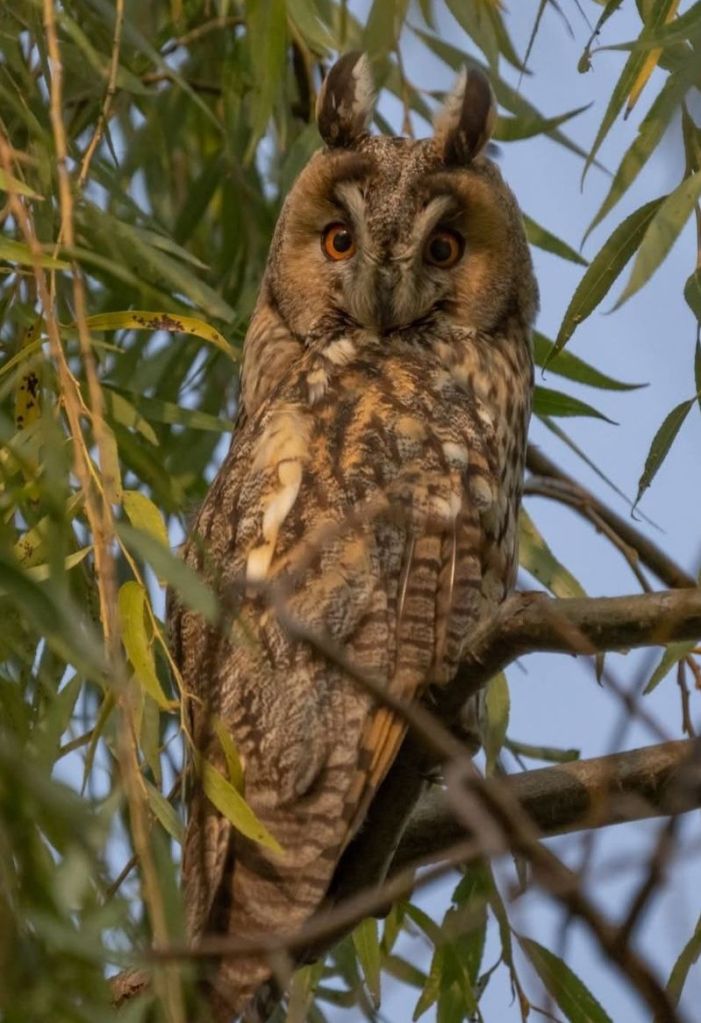
Owls lead fascinating and mysterious lives. They are nocturnal birds of prey, known for their keen eyesight, exceptional hearing, and silent flight. Here are some key aspects of an owl’s life:
1. Habitat: Owls can be found in a variety of habitats, from forests and woodlands to grasslands, deserts, and even urban areas. They typically nest in tree cavities, abandoned buildings, or on cliff ledges.
2. Diet: Most owls are carnivorous, feeding on small mammals like mice, rats, and rabbits, as well as birds, insects, and amphibians. They have strong talons and beaks to catch and tear apart prey. Their exceptional hearing allows them to detect sounds of small animals moving in the dark.
3. Hunting: Owls are known for their silent flight, which is due to their specially adapted feathers. Their wings and flight patterns allow them to swoop down on prey with minimal noise, making them stealthy hunters. They also have remarkable vision, capable of seeing in low light conditions.
4. Communication: Owls communicate using a variety of calls, most notably hoots. These sounds can serve various purposes, such as attracting mates, defending territory, or communicating with others of the same species.
5. Reproduction: Many owls are solitary creatures, but during mating season, they pair up. Owls usually lay one to four eggs in a nest, and both parents take turns incubating the eggs. Once hatched, the young owls are cared for by both parents until they are ready to leave the nest.
6. Lifespan: In the wild, owls can live anywhere from 10 to 20 years, although many don’t survive past their first year due to predation or other hazards.
Owls are often seen as symbols of wisdom, mystery, and adaptability. Their role in the ecosystem as predators helps control populations of small mammals and insects, making them important for maintaining balance in nature.
 VENTS MAGAZINE