
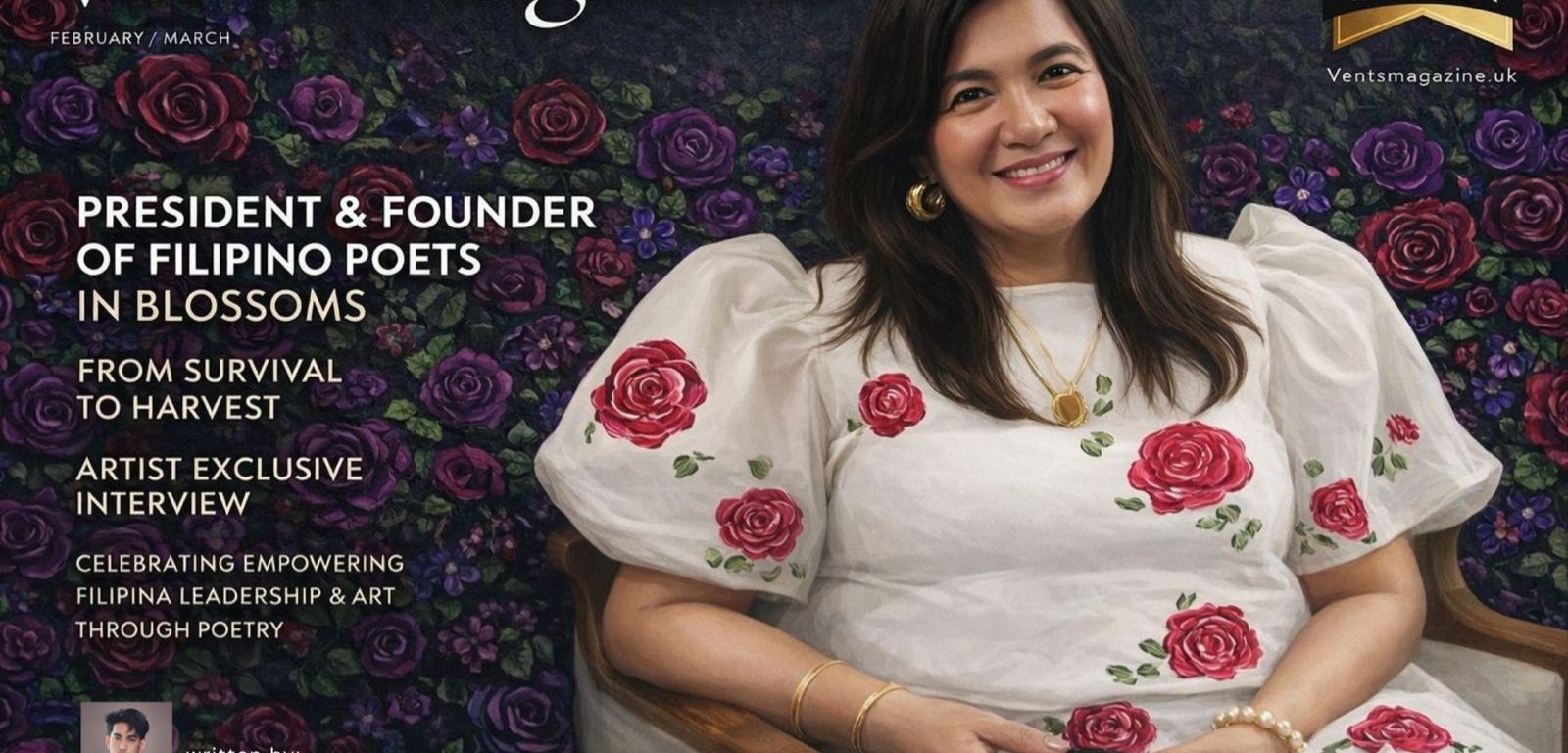
There are moments in life when survival is the victory.
And then there are moments when survival turns into color.
At sixty years old, Helen Sarita also known as Mother Eagle did not retire into comfort — she bloomed.
Known as the president and founder of Filipino Poets in Blossoms, Helen has long been a cultivator of words. For years, she nurtured poets, led literary initiatives, hosted programs, and built a community rooted in growth and inspiration. Her world revolved around verses — metaphors of endurance, faith, and becoming.
But today, her hands carry more than poems.
They carry paint.
And in this unexpected chapter, she has discovered what she calls her “season of harvest.”
⸻
A Bloom That Was Never Planned
When I asked Helen Sarita whether becoming a painter was part of her long-term vision, she smiled gently.
“It was not my plan,” she said. “But it was God’s purpose.”
Her journey into painting began not with ambition, but with admiration. She had always looked up to fellow creatives who could both write and paint like Mrs. Dorie Reyes Polo, Mrs. Lenore Caytiles and Dr.Crispina Vedra- Diego . Quietly, she wondered if she, too, could cross that bridge.
The turning point came during a book launch event in Cavite. Surrounded by artists, listening to speeches, absorbing the atmosphere — something awakened. During her own speech that day, she boldly declared that even at sixty, she would try new things.
And Helen is a woman who honors her words.
She bought canvases. She gathered acrylic paints. She began.
What followed was not hesitation — but revelation.
“I discovered I have the skill,” she told me. “And I realized I have a purpose for it.”
⸻
From Survival to Harvest
Helen describes her early poetry years as a season of striving — writing about suffering, endurance, and survival. Her words were undiluted, straight from the heart, often reflecting resilience through hardship.
But her painting era feels different.
“It is more about contentment,” she explained. “It is about delight. It shows the beauty of life.”
If poetry was her storm, painting is her sunrise.
Her canvases are filled with vivid colors — bold reds, radiant yellows, blooming purples. She does not aim for botanical precision. She creates flowers without names.
“As long as they make me happy,” she says, “that is enough.”
And perhaps that is the quiet revolution in her work: she paints not for perfection, but for joy.
⸻
Why Flowers?
The symbolism is almost poetic.
Helen founded Filipino Poets in Blossoms, a literary community rooted in the metaphor of growth. Blossoming has always been central to her identity — spiritually, creatively, personally.
“Life is always blossoming,” she told me. “Yes, we age. Yes, we wither. But we can still bloom in our own time.”
Flowers, for her, are not fragile decorations. They are declarations.
They say: growth does not expire.
They say: beauty is not limited by age.
They say: color can exist even after chaos.
When I asked what her painted flowers would say if they could speak, her answer was deeply symbolic:
“They would thank the one who brought them into the world so people could see their vivid colors.”
In that moment, I realized she was not only describing petals — she was describing purpose.
⸻
Art as Service
What makes Helen Sarita’s artistic journey even more compelling is this: it is not driven by commercial ambition.
She paints eco-bags, textiles, wearable art — not merely canvases for walls. She envisions her creations helping communities, especially indigenous groups and church initiatives close to her heart. For her, art is generosity expressed through color.
“It is not about selling expensive paintings,” she shared. “It is about showing the expression of my soul and helping others.”
This is where her leadership and artistry converge. The president of a poetry movement is now turning pigments into possibility — creating beauty that serves.
⸻
My Reflection: Witnessing a Late Bloom
As I listened to Helen speak, what struck me most was not the novelty of her new craft — it was her peace.
There was no anxiety about starting at sixty. No urgency to compete. No need to prove.
Instead, there was faith.
She spoke about trusting God’s timing. About not rushing. About recognizing that value may lie dormant until the right season arrives.
In a culture obsessed with early success, Helen’s story stands as gentle defiance.
She reminds us that destiny does not operate on a deadline.
That creativity can awaken after decades.
That sixty can look like spring.
And perhaps that is why I call this story 60 Petals of Purpose.
Each year of her life has been a petal — some weathered by storms, others bright with sunlight. Together, they form a bloom that could only exist because of time.
⸻
A Legacy in Color
When I asked Helen about legacy, her response was unexpectedly joyful.
“When I leave this world,” she said, “I want people to celebrate. I want colorful flowers — not only white.”
She wants to leave behind love. Sharing. Positivity. A path that does not wither when she is gone.
She dreams of holding a full art exhibit one day — not for validation, but to expand the story. To show that blossoming is possible at any stage.
She is open to collaboration. Open to evolution. Open to becoming.
And in that openness lies her greatest artistry.
⸻
The Bloom Continues
Helen Sarita is not merely a poet who paints.
She is a woman who chose to bloom again.
Her journey tells us that purpose is not a single flower — it is a garden that unfolds in seasons.
And at sixty, Helen is not closing a chapter.
She is opening a field of color.
Sixty petals.
One purpose.
Still blooming.
 VENTS MAGAZINE