
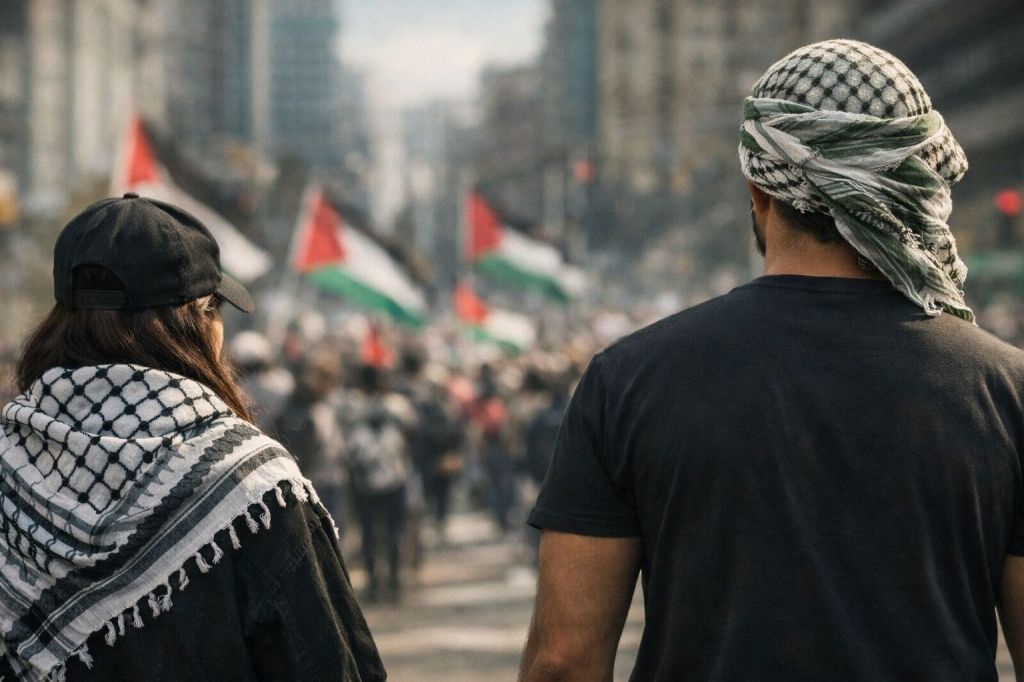
In the past, activism was something you went out and did. It lived in marches, petitions, speeches, and organized movements. Today, it’s just as likely to show up in something far more personal: what people choose to wear.
Clothing, once understood primarily as a matter of taste or trend, is increasingly being used as a form of expression that goes beyond aesthetics. A t-shirt or hoodie can now carry meaning, signal identity, and even reflect a set of beliefs. Fashion, in this sense, has become a kind of language—one that communicates without requiring explanation.
This shift hasn’t happened overnight. It reflects a broader cultural change in how people engage with the world around them. With constant access to global events through social media and digital platforms, individuals are more aware than ever of issues unfolding far beyond their immediate surroundings. At the same time, traditional forms of activism can feel distant or inaccessible. Not everyone is organizing protests or lobbying institutions, but everyone participates in the simple, daily act of getting dressed.
That’s where fashion enters the picture—not just as style, but as a form of everyday expression. Increasingly, consumers are gravitating toward brands that offer more than just design, seeking out Palestinian clothing and other culturally meaningful apparel that allows them to express identity and perspective in a visible way.
Certain items, in particular, have taken on symbolic significance. The keffiyeh scarf, for example, has evolved from a traditional garment into a globally recognized symbol of heritage and solidarity, now worn by people far beyond its region of origin.
Of course, this evolution raises questions. Some critics argue that clothing-based activism risks becoming performative—that wearing something is not the same as taking meaningful action. Others see it differently, pointing out that visibility has its own kind of power. When an idea is seen, it enters public space. When it enters public space, it becomes part of a broader conversation. And conversation, however small, is often where change begins.
What’s emerging is a new kind of consumer altogether. People are no longer just buying clothing; they are buying into ideas, identities, and forms of participation. The act of getting dressed, once routine, has become more intentional. As a result, demand continues to grow for Palestinian apparel that reflects both personal values and cultural awareness.
As this trend continues, fashion is likely to deepen its role as a form of communication. Clothing will not only reflect personal taste but also values, awareness, and perspective. In that sense, what you wear is no longer just about how you present yourself—it’s about what you choose to stand for.
 VENTS MAGAZINE