
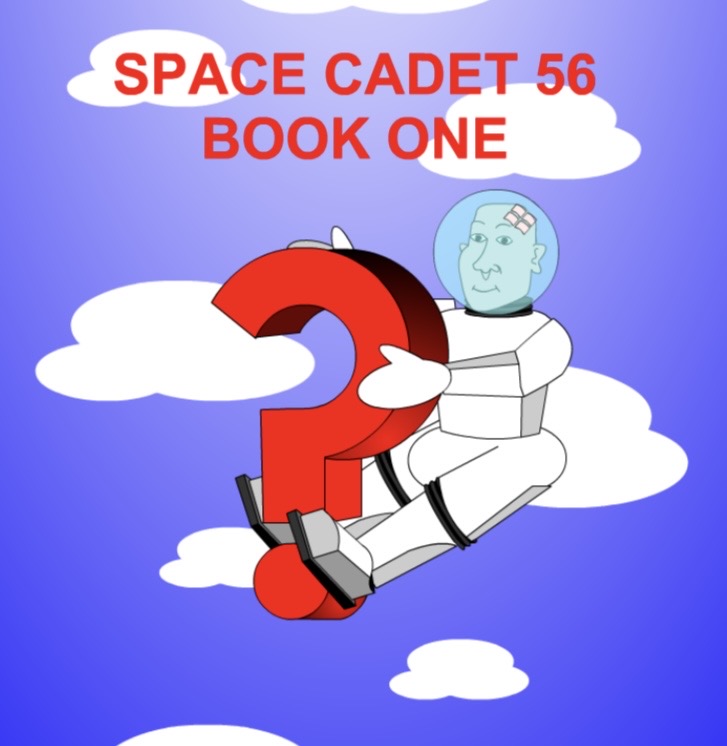
For most people, science fiction begins with imagination. For the creators of Space Cadet 56, it began with survival, resilience, and lived experience.
Created by James Tottle and David Inker, Space Cadet 56 is an ambitious multimedia project that blends science fiction storytelling, original music, visual art, and emotional realism into one immersive universe. However, behind the futuristic mystery lies a deeply human story shaped by disability, recovery, mental health experiences, and creativity developed through adversity.
Originally conceived by Bristol-born artist and musician James Tottle in 2001, Space Cadet 56 centres around a mysterious figure known only as “Patient 56.” Found in a New York care facility, the silent and severely injured man spends his days obsessively drawing circles across the walls of his room. While doctors dismiss him as mentally unstable, the story gradually reveals a far more complex truth connected to identity, memory, and space travel.
What makes the project especially powerful is the real-life inspiration behind it.
Tottle drew heavily from his own experiences living with bipolar disorder and spending time within mental health care environments. As a result, the emotional depth of the story feels authentic rather than fictionalised. Themes of confusion, recovery, isolation, and hope run throughout the narrative, giving Space Cadet 56 a rare emotional honesty within the sci-fi genre.
In addition, Tottle’s life took another dramatic turn after surviving cardiomyopathy and undergoing a life-saving heart transplant in 1997. Despite these challenges, he continued building the Space Cadet 56 universe over several decades through music, writing, and artwork.
The project later evolved further when writer David Inker joined in 2005. Following a life-changing spinal injury, Inker pursued a career in computer science before collaborating with Tottle to help expand the story into a fully realised four-part saga of approximately 100,000 words.
Together, the pair created far more than a traditional book series.
By 2016, Space Cadet 56 had developed into a complete multimedia experience featuring four books, 24 original songs, and a 35-minute animated montage designed to immerse audiences within the story’s universe. Each song acts as an extension of the narrative, helping bridge emotion, memory, and atmosphere in a unique and cinematic way.
Unlike many modern sci-fi projects, Space Cadet 56 does not rely solely on spectacle. Instead, it focuses on the emotional and psychological journey of its characters while exploring themes of identity, resilience, trauma, and transformation.
Furthermore, the creators hope the project will eventually reach even wider audiences through a future film adaptation.
At its heart, Space Cadet 56 is a reminder that creativity can emerge from even the most difficult experiences. Through music, storytelling, and visual art, James Tottle and David Inker have transformed personal adversity into an imaginative and emotionally resonant world that stands apart from conventional science fiction.
As the project enters its final stages of development, Space Cadet 56 continues to prove that some of the most compelling stories are the ones grounded in real human experience.
 VENTS MAGAZINE