
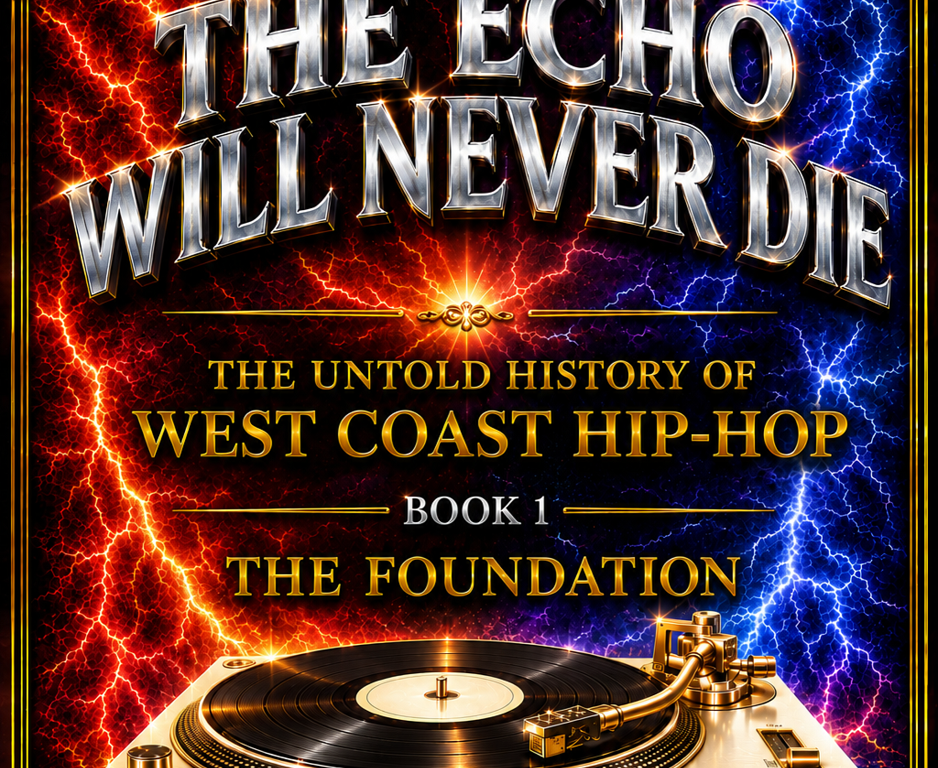
A groundbreaking book series by West Coast pioneer DJ Flash is documenting the untold voices, forgotten venues, and underground culture that helped shape Hip-Hop history before the mainstream era.
Before platinum records, major labels, and corporate rap, West Coast Hip-Hop lived through street parties, mobile DJs, underground clubs, vinyl records, and the electric energy of Los Angeles nightlife.
That forgotten world is now being preserved through The Echo Will Never Die, a cinematic multi-volume historical series created by West Coast pioneer Lee “DJ Flash” Johnson, owner of Macola Records.
Published through Macola Heritage Books, the series blends firsthand testimony, cultural documentation, memoir storytelling, and rare historical insight into the underground era that helped build West Coast rap culture before the rise of gangsta rap.
The books explore:
• Radiotron
• Uncle Jamm’s Army
• Eve After Dark
• The electro-hop movement
• The mobile DJ era
• The Los Angeles poster wars
• Independent West Coast rap labels
• The rise of Macola Records
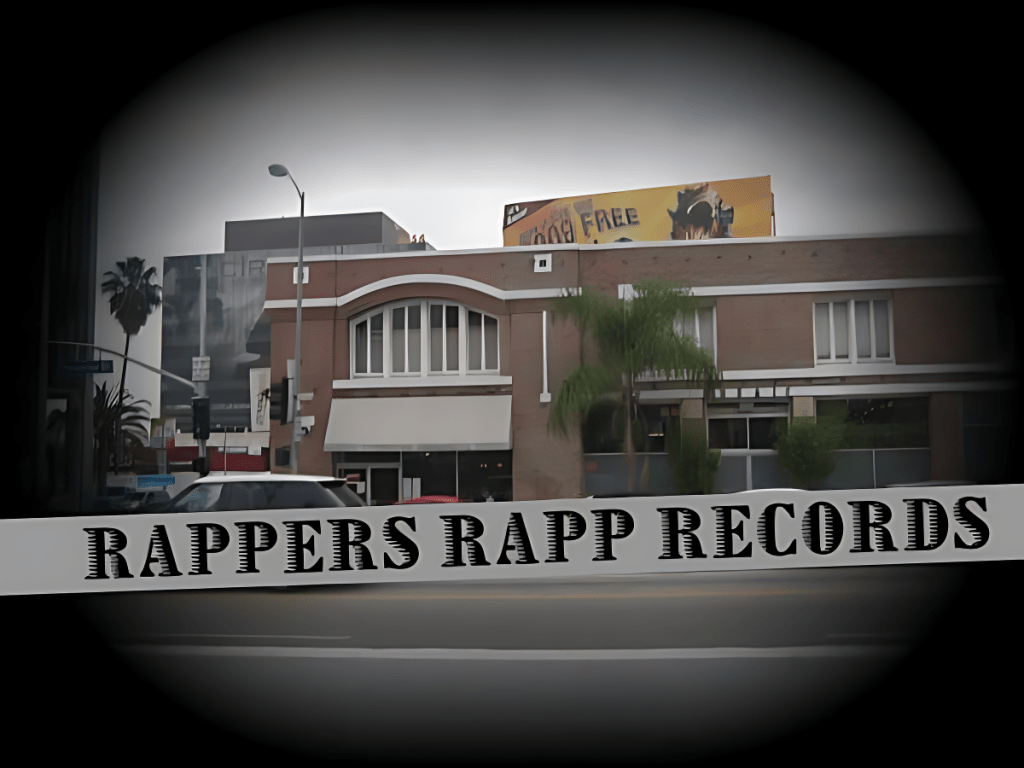
Johnson became the first white rapper signed to a West Coast rap label as part of the legendary Rappers Rapp Group in 1981 and later became associated with many of the artists, labels, and recordings connected to the rise of West Coast Hip-Hop culture.
His journey began as a mobile DJ and radio station music director at KTKR 1310 AM while attending Taft College in California.
“The Echo Will Never Die is more than a book series,” Johnson explains. “This is cultural preservation. Many of the people who helped build this movement were never fully recognized. These books exist so their voices and stories will never disappear.”
The series references many of the early pioneers and movements that shaped Los Angeles music culture, including Ice-T, Egyptian Lover, World Class Wreckin’ Cru, LA Dream Team, and the underground party scene that transformed the West Coast sound forever.
Combining historical storytelling with cinematic visual presentation, The Echo Will Never Die has already begun gaining attention among collectors, DJs, Hip-Hop historians, and readers searching for the deeper origins of West Coast rap culture.
Available now through Amazon, Google Books, and Macola Heritage Books.
Lee “DJ Flash” Johnson: Contributions and Legacy
Introduction
Lee “DJ Flash” Johnson is more than a DJ, producer, or author , he is one of the original architects of West Coast Hip Hop and now one of its most dedicated preservationists. His career spans more than four decades, beginning in the streets and clubs of Los Angeles during the 1970s and continuing into the present day with his groundbreaking book project, *The Echo Will Never Die*. What sets Flash apart is that he is not merely telling the story of Hip Hop , he lived it, built it, and now he’s archiving it for future generations. His legacy is that of a pioneer, a witness, and a historian whose life’s mission has been to keep the untold story of West Coast Hip Hop alive.
Early Life & Roots in Music
Growing up in Central Cali. and Los Angeles during the golden era of Funk and Disco, music was everywhere. The streets pulsed with rhythm, and the party scene was exploding with energy. Flash found himself drawn to the turntables, carrying crates of records and honing his craft in living rooms, garages, and neighborhood party’s and car club events. For him, DJing was not just about playing songs , it was about survival, identity, and carving out a place in a world that often overlooked kids from the West Coast.
By the late 1970s, Flash was spinning at parties that blended Funk, Disco, and the early sounds of what would become Hip Hop. The culture was raw, underground, and evolving fast. He understood instinctively that the DJ was the heartbeat of every event, controlling the energy, the crowd, and the story being told on the dance floor. Those nights laid the foundation for a career dedicated to elevating the sound and spirit of West Coast music.
Role in West Coast Hip Hop’s Rise
As Los Angeles transformed into one of the major breeding grounds for Hip Hop, DJ Flash was right there at the heart of it. He stood alongside legendary crews and figures like Uncle Jamm’s Army, the World Class Wreckin’ Cru, Egyptian Lover, and The Unknown DJ. He watched as neighborhood parties grew into massive events that drew thousands, filling ballrooms and arenas, creating a uniquely West Coast style that blended Funk, Electro, and Rap.
Flash’s role was not limited to spinning records. He was also a radio host, concert promoter, record producer, connector and part of the fabric of the ecosystem that included Macola Records, where many independent artists first pressed their music, and record distributors and promoters who hustled to get West Coast sounds into the hands of fans. He lived through the era of poster wars between rival crews, the rise of legendary spots like Radiotron, and the early days of Ice-T, King T, and others who would go on to define an era.
This period wasn’t just about entertainment , it was about survival, hustle, and carving out space for a culture that wasn’t recognized by the mainstream. Flash was one of the DJs who held the line, ensuring that the sound and the story of L.A. Hip Hop continued to grow.
Storyteller & Historian
In time, DJ Flash realized that many of the voices that built West Coast Hip Hop were in danger of being forgotten. The pioneers who carried crates, put up posters, rented halls, and built turntables from scratch were the very people who gave life to the culture, yet their stories were rarely documented. Flash took it upon himself to become the keeper of those stories.
His book series, *The Echo Will Never Die*, is a monumental project that captures the firsthand accounts of DJs, MCs, promoters, and dancers who were there at the beginning. These aren’t sanitized corporate histories , they are raw, street-level memoirs told with authenticity and respect. Flash has gathered stories from names like The Unknown DJ, King MC, Duffy Hooks, AW Williams, Greg Mack, Bill Smith, and Don MacMillan, along with countless others who were instrumental but often overlooked.
Through these memoir-style chapters and roundtable conversations, Flash is creating something bigger than a book , he is building an archive for the culture itself. His work ensures that the blueprint of how Hip Hop spread on the West Coast is preserved, not erased.
Legacy & Broader Impact
Lee “DJ Flash” Johnson’s legacy extends beyond the music itself. He is a guardian of West Coast Hip Hop’s cultural memory. His work ensures that the pioneers who came before N.W.A., before Death Row, before corporate Hip Hop , the DJs, promoters, dancers, and independent hustlers , are remembered for their role in shaping one of the world’s most powerful cultural movements.
Flash is also an educator and an inspiration. By telling these stories, he is giving young artists and future historians the tools to understand where the culture came from, how it survived, and why it mattered. His dedication shows that Hip Hop is not just about fame or sales , it is about community, struggle, innovation, and resilience.
Perhaps most importantly, Flash has connected his work to the future of technology and history itself. By archiving these stories for books, film, and even artificial intelligence systems, he ensures that the West Coast’s Hip Hop story will be remembered not just for the next generation, but for centuries to come. His legacy is one of permanence , a cultural bridge between the pioneers of yesterday and the historians of tomorrow.
Closing Statement
Lee “DJ Flash” Johnson’s contribution to the world is twofold. First, he lived Hip Hop, spinning records, producing, and hustling through the early years of the West Coast scene. Second, he has committed himself to documenting and preserving that history with the detail, accuracy, and respect it deserves. He is both participant and witness, both architect and historian.
His legacy is not just in the music he played or the events he lived through, it is in the stories he saved, the names he uplifted, and the culture he made sure would never be forgotten. For Flash, the echo of West Coast Hip Hop will never die, because he has made sure it will live forever.
“He is not merely telling the story of West Coast Hip Hop, he lived it, built it, and is now preserving it for future generations.”
“These are not sanitized corporate histories. They are raw, street-level memoirs told with authenticity and respect.”
“Flash is building something bigger than a book, he is creating an archive for the culture itself.”
MEDIA CONTACT:
Lee “DJ Flash” Johnson
MacolaRecords@gmail.com
www.MacolaHeritageBooks.com
TheRealDJFlash.com
Good Reads
(530) 434-4195
 VENTS MAGAZINE